FORECASTING OUR WAY OUT OF (AND INTO) UNCERTAINTY
1730-Present
WORLDWIDE: The ingredients for capitalism—property ownership, finance, colonial power, double-entry bookkeeping, a conceptual division between nature and society, etc.—were all around for several hundred years before being put into a meal. It has been argued that two decades of exceptionally good weather in England from 1730 to 1750 improved food supply and started a habit of investment in manufacturing, which ultimately created a feedback loop as fossil fuel burning and ecological transformation affected global temperatures.
One key ingredient for surplus growth was the availability of finance: borrowing on the anticipation of future income was a lever to introduce changes to production. It put tremendous weight on predicting future markets. But borrowing demanded payback on interest. The concept of “return on investment” emerged, measuring the performance of capital reinvested into industry. It blended into a colonial paradigm to create the notion of GDP growth as measure of success.
This nearly universal demand for exponential returns put unprecedented strain on ecosystems. Each successive technological innovation made it more efficient to exploit natural resources, while simultaneously increasing the demand for them with each successive improvement in lifestyle. The burning of fossil fuels for energy, which put excessive carbon into the air and increased global temperatures, was one of many practices that had a two-faced relationship with the future. On the one hand, it anticipated short-term profits by making the most use of nature. On the other hand, it chose to ignore the long-term consequences of that use and its waste products. Ironically, enterprises that depended on predictability contributed to creating an environment of radical uncertainty as heat waves, storms, droughts and flooding became prevalent.
Humans have a unique ability to project into the future. As Marx noted, “what distinguishes the worst architect from the best of bees is this, that the architect raises his structure in imagination before he erects it in reality.” The ability to plan projects (as well as the capital to execute them) is what makes architecture possible. It has also made it possible to borrow from the future, while everything else in nature can only adapt to the present.
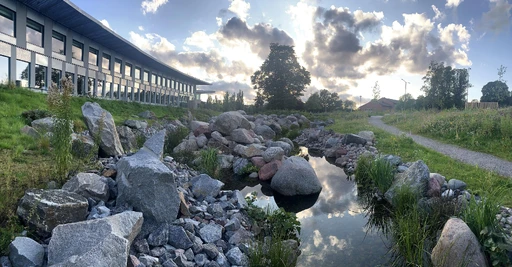
The project Future Island uses our abilities to project into the future, simulating how anticipated global warming will affect lifeforms on a local scale.